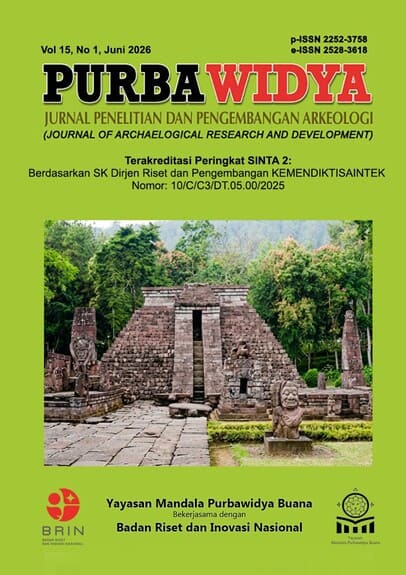
A study of the reliefs at Sukuh Temple is needed as visual archaeological evidence of Hindu-Javanese culture through semiotic interpretation. The purpose of this study is to explain how fertility, cosmological, and religious motifs convey ritual functions and regulate sacred movements at Sukuh Temple. The research uses a descriptive qualitative design through on-site observation, systematic visual recording (photos, measured sketches, and panel mapping), and in-depth analysis of primary reports and the latest scientific works. The data was interpreted to identify themes and narrative structure, then read semiotically to trace denotative forms and connotative cultural meanings. The results showed an integrated sign system dominated by images of fertility and body symbolism, including lingga-yoni.

Oleh :
Menul Teguh Riyanti